Licensing Regulations Across French Regions and Their Effects on Video Poker Jackpot Configurations in Online Platforms
Erik Washington · Sep 20, 2026
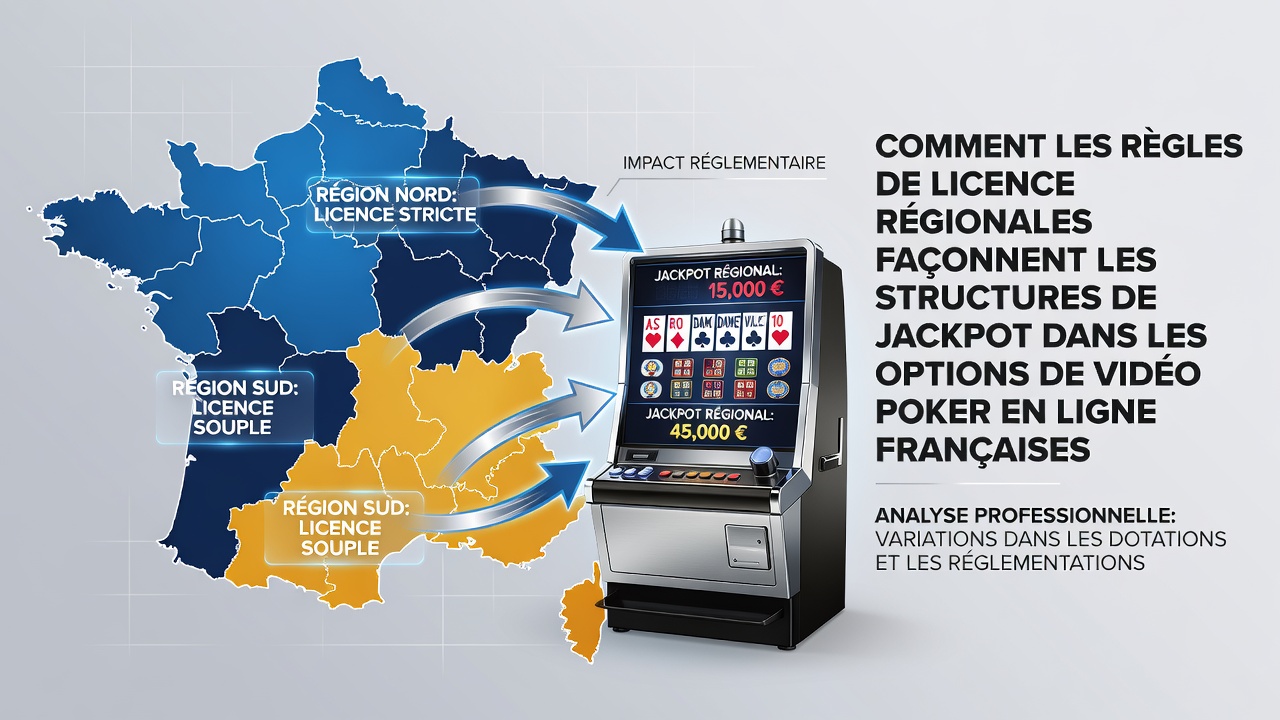
Licensing Regulations Across French Regions and Their Effects on Video Poker Jackpot Configurations in Online Platforms
Regional licensing frameworks in France determine how operators structure video poker jackpots, with rules that vary by territory and influence whether payouts take progressive or fixed forms. Data from the Autorité Nationale des Jeux shows that operators must align jackpot mechanisms with specific license conditions tied to geographic zones, which creates distinct prize pool behaviors across platforms.
Operators holding licenses for metropolitan France face requirements that cap progressive jackpot contributions at certain percentages of wagers, whereas those licensed in overseas territories such as Martinique or Réunion operate under separate parameters that permit higher accumulation rates. These differences stem from local statutes that address consumer protection thresholds and tax obligations unique to each area.
Core Licensing Categories and Jackpot Parameters
French regulatory bodies issue licenses under categories that directly reference jackpot types, and each category imposes contribution limits along with approval processes for progressive systems. Operators must submit detailed models showing how seed amounts and increment rates comply with regional caps before deployment.
Studies from European gaming research groups indicate that licenses granted after 2024 updates introduced tighter controls on multi-site progressive networks, requiring separate approvals when jackpots span multiple French regions. This separation prevents cross-territory pooling unless each participating license explicitly authorizes shared funds.
Regional Variations in Practice
In mainland France, video poker titles often feature fixed jackpots because licensing terms prioritize predictable payout ratios over rapid growth, while certain overseas departments allow progressive elements that build more aggressively due to lower baseline tax rates on winnings. Observers note that these patterns appear consistently across platforms operating under each license class.
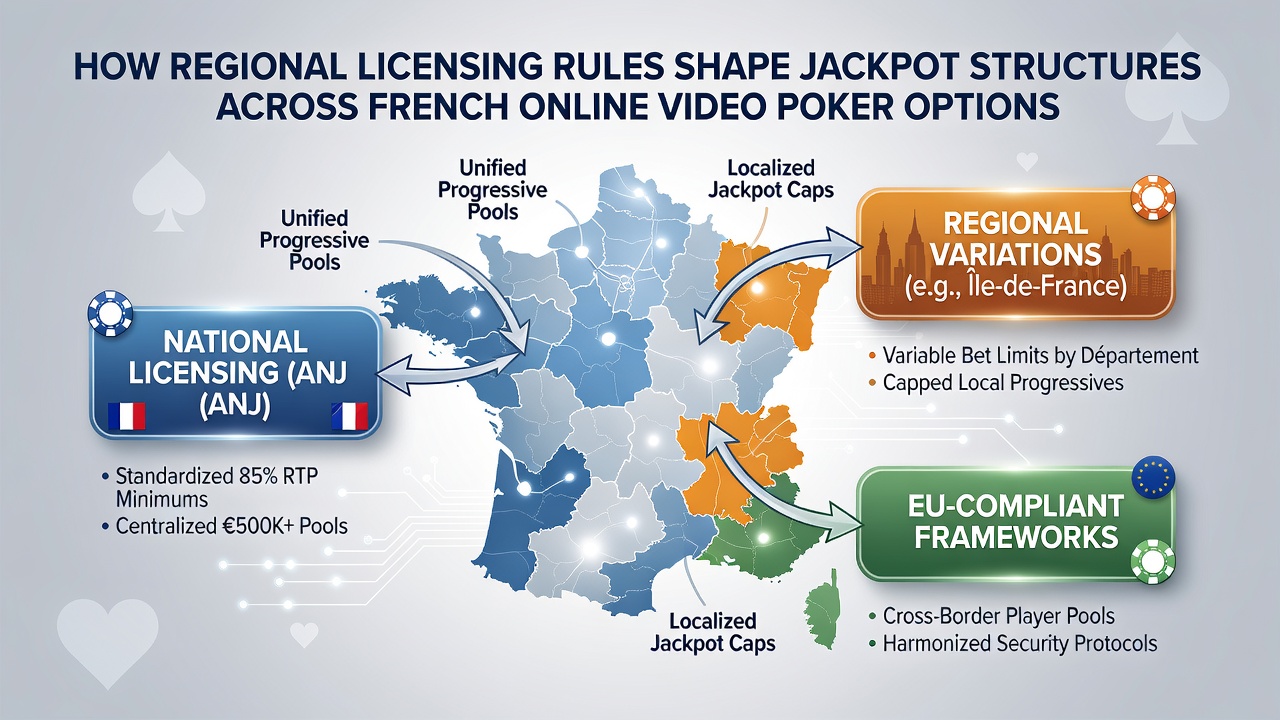
September 2026 brought new reporting mandates from regional authorities that require monthly disclosures of jackpot contribution flows, which has made visible the extent to which license conditions shape final prize structures. Platforms serving the Île-de-France area now publish contribution percentages that differ measurably from those in Nouvelle-Aquitaine, reflecting distinct license stipulations.
Operator Compliance and Structural Adjustments
Operators adjust video poker variants to match license specifications, often modifying royal flush payouts or adding secondary progressive tiers when regional rules allow. Research conducted by gaming economics teams at French universities demonstrates that these adjustments maintain compliance while preserving player engagement metrics across territories.
One documented case involved an operator transitioning a five-card draw variant from a fixed jackpot model in Paris-licensed operations to a tiered progressive structure under a Provence-Alpes-Côte d'Azur license, which required recalibration of increment rates to stay within approved bounds. Such transitions highlight how licensing boundaries dictate mechanical options.
Comparative Influences from Broader Frameworks
Although national oversight through the Autorité Nationale des Jeux sets baseline standards, regional licensing adds layers that affect jackpot visibility and accessibility, and data shared with international bodies shows France's approach produces more localized prize distributions than centralized systems elsewhere. A report from the Autorité Nationale des Jeux details how these layered rules create measurable differences in average jackpot sizes between regions.
Cross-referencing with studies from Canadian provincial regulators reveals that similar regional licensing produces parallel effects on progressive mechanics, suggesting the French model aligns with patterns observed in other jurisdictions that delegate authority to sub-national entities.
Conclusion
Regional licensing rules continue to define jackpot configurations in French online video poker by setting contribution limits, approval requirements, and structural allowances that vary by territory. These frameworks produce distinct prize behaviors across platforms while maintaining compliance with overarching consumer protections, and ongoing reporting obligations ensure transparency in how each license shapes outcomes.